Family risk is known
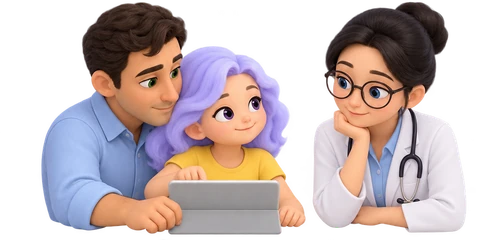
Family history can identify children to watch before formal reading begins.











Assess your child’s risk early to act before reading problems emerge at school.

The dyslexia paradox
Dyslexia does not begin at school. Research shows that in infants predisposed to dyslexia, biological risk markers are already evident at an early age. For children at risk, screening is necessary at an early age because help and intervention are most effective before school, when a child's brain is highly neuroplastic. But a diagnosis is usually made much later—after visible failures in reading ability. As a result, the system recognizes the problem when the best time for intervention has already been missed. This is the dyslexia paradox.
Act while the window is still open. Up to 92% of at-risk children reached grade-level reading after early intervention.
Start ScreeningFamily history can identify children to watch before formal reading begins.
Observable pre-reading markers can appear before ordinary reading screens are useful.
Start ScreeningConcern is visible, but action stalls. Each month of delay narrows the intervention window.
Standard questionnaires rely on adult interpretation. Screeners require reading or phonological skills that have not yet developed.
Even when the concern is well-founded, support comes only after enough school evidence has accumulated.
The system finally responds, but the window has nearly closed: 88% of children remain poor readers by the end of fourth grade.
The response starts when the child is already clearly struggling to read.
After that, reading skills rarely catch up to grade level.
If your child is at risk for dyslexia, waiting until it shows up in school reading means waiting for failure. Standard screeners rely on skills a young child may not have yet: sound awareness, letter knowledge, or reading words. A preschooler may not be reading yet. That can be normal, or it can hide risk. Rockids uses the Reading Simulator to run a simulated reading flow without asking the child to read words. The screener measures gaze patterns and finger patterns and calculates dyslexia risk.
Start ScreeningHow it works
The standard path starts with a parent questionnaire or tasks in sounds, letters, and reading — skills a young child may not yet have. Instead, Rockids Dyslexia Screener uses the patented Reading Simulator technology: your child goes through a reading simulation without having to read words. The app captures eye and finger movements, and an algorithm calculates an early dyslexia-risk assessment. You can discuss the report with a speech-language pathologist, pediatrician, or neurologist.
In reading, the eyes do not glide smoothly along a line. They jump, pause briefly, and sometimes move back. These movements are called saccades, fixations, and regressions. They show how a child processes the line.
In dyslexia and reading difficulties, line processing is different: the eyes linger longer, return backward more often, and forward movements become shorter and less stable. That is why early screening has to look at the movement pattern itself.
Reading Simulator guides the child through a reading simulation without requiring them to read words. The app captures eye and finger movements and uses those data to assess dyslexia risk.
You only confirm the child’s age, language, and basic context. The main signal comes from the child.
Reading Simulator guides the child through a reading simulation on a phone or tablet.
The app analyzes where the eyes pause, where they return, and how the child moves a finger across the screen.
The algorithm uses eye and finger movement data from completed screenings to calculate a dyslexia-risk assessment.
The report explains the risk level, shows what the screening observed, and suggests next steps for a conversation with a speech-language pathologist, pediatrician, or neurologist.
Rockids Dyslexia Screener shows an early risk signal from your child’s eye movements, builds a report, and gives clear next steps. Instead of anxiety, you get data: what the screening noticed, what to discuss with a specialist, and how to act next.
Pricing
Get a dyslexia risk assessment for a preschooler in 5 minutes. At home, on a smartphone or tablet.
Free
Try for Free3 screenings to identify a consistent signal. Get a report with risk markers and an overall risk assessment.
$49
Assess RiskTake control of the situation. Take action to advance your child’s reading development.
$99
Take Control

Rockids Dyslexia Screener does not diagnose. It shows early indicators of reading difficulties and produces a report that you can discuss with a speech-language pathologist, pediatrician, or neurologist.
FAQ
Yes. That is exactly why Rockids Dyslexia Screener exists. Your child does not need to know how to read.
Yes. The screening is designed for home use. You need a phone or tablet with a working front-facing camera. One screening takes about 5 minutes. Choose a moment when your child is calm.
Existing screeners rely on questionnaires, phonological tasks, letters, or reading. Rockids Dyslexia Screener estimates risk from direct signals from your child: eye and finger movement.
From age 3. Older children can also complete the screening. The built-in age check allows the result to be extrapolated with age context taken into account.
No. It does not block the screening. Rockids Dyslexia Screener does not require letter knowledge and is not built on phonological tasks.
No. Rockids Dyslexia Screener does not diagnose dyslexia. It shows early risk indicators and produces a report of the results that you can discuss with a specialist.
Your child completes a five-minute screening in the Reading Simulator. Their only task is to follow a moving guide with their finger while the app tracks eye and finger movement.
During reading, the eyes do not move smoothly: they stop, jump, and sometimes go back. With reading difficulty, these patterns often differ. Rockids Dyslexia Screener uses them as early risk indicators in its scoring model.
Because the school system reacts when it is already late and difficulties have settled in. Most screeners require letters, sounds, or reading. Rockids Dyslexia Screener looks earlier, when intervention is most effective: before reading failure becomes the trigger.
One run can be affected by tiredness, distraction, lighting, or device position. Three screenings help reveal a repeating signal, not a random episode.
Stop and repeat later. An interrupted run does not use a screening: a calm, valid attempt is more useful than pushing a tired child to finish.
The app checks data quality. A low-quality screening does not go into the report and does not use an attempt. You can repeat it when your child is calm, the lighting is good, and the device is positioned correctly.
No. The camera is needed to track eye position during the task. Rockids Dyslexia Screener does not record your child's face, take photos, or upload video. Only normalized numerical eye coordinates are used.
Only you. The parent controls the report: the PDF can be saved or shared with a speech-language pathologist, pediatrician, neurologist, reading specialist, or teacher only when you decide.
Risk level, parent summary, breakdown of gaze and touch signals, page-by-page eye and finger maps, quality context, and data for a specialist.
You are not left alone with anxiety. The report shows what the screening noticed, which steps you can start at home, and what to discuss with a speech-language pathologist, pediatrician, or neurologist.
The risk signal can change with age, practice, and support. Repeat risk assessments show the trend: whether the pattern is getting weaker, staying stable, or getting stronger. That makes it clearer whether the current support is working.
You get a baseline and know what to do now: watch, support age-appropriate reading skill, and repeat the screening later if new concerns appear.
Not a retelling of your worry, but structured data: risk level, gaze and touch signals, screening quality context.
The report adds the results of your child's tasks and a risk assessment to your observations. You can show it to a specialist. It does not replace a professional assessment.
Trial Screening: 1 free screening; Preliminary risk assessment. Risk Assessment: 3 screenings; Practice mode; Risk markers explained; Eye and touch signals explained. Annual Plan: 3 risk assessments to track changes; Practice mode; Activity journal and reading skills guide; Priority support.